
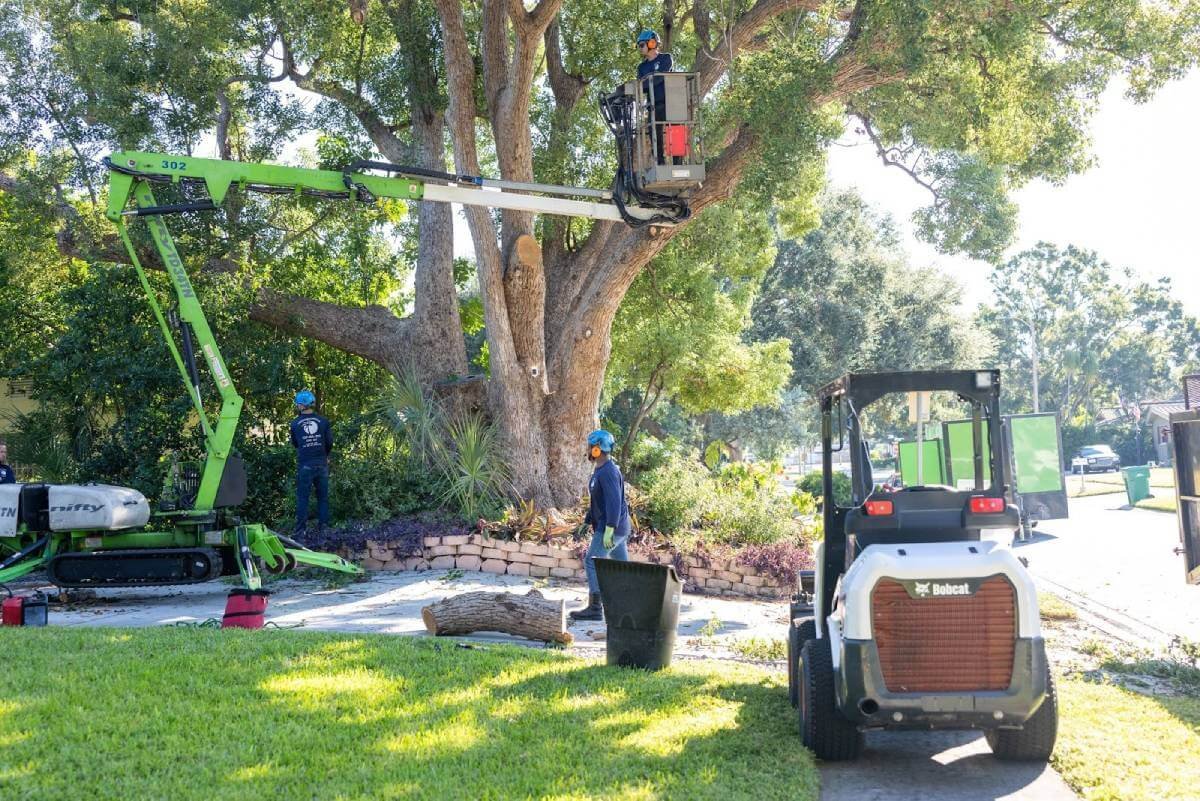
After tree removal, the stump is what is left in the way of mowing, planting, or building. Stump grinding is the usual Florida fix: a machine chews the wood into chips and drops the hazard below grade without digging a crater. Still have other trees nearby? Scan them with signs your tree needs attention so the next problem does not blindside you.
Here is a straight homeowner-level look at how stump grinding works in Florida, what it costs, where things go wrong, and when to hire someone instead of renting a machine for the weekend.
Why Bother Grinding a Stump in Florida?
Left alone, stumps are tripping hazards, get in the way of lawn equipment, and can sprout suckers on some species—especially in warm, wet weather that keeps roots active.
They also host insects (including termites in some cases) and decay fungi—the same yard often has other palm and oak pest pressure to monitor. That is not always an emergency, but it is reason enough to deal with the stump if the tree is already gone.
Compared with pulling a stump with heavy equipment, grinding usually disturbs less of the root plate and avoids huge holes—helpful on sandy soils that already shift and settle. You still get a pile of wood chips; whether they stay, get mixed into soil, or get hauled off should be spelled out in the quote.
How Does Stump Grinding Work?
A stump grinder uses a spinning wheel with teeth to shave the stump layer by layer. The operator works from the outside in, controlling depth and angle.
Typical workflow:
- Locate utilities — Call 811 (Sunshine State One Call) so buried lines are marked before you grind deep.
- Clear rocks, debris, and low wire — anything that can fly or snag the machine.
- Grind to agreed depth — often several inches below grade for turf; deeper for hardscape or replanting a tree in the same spot (not always recommended without soil prep).
- Backfill — rake chips into the hole, add soil if needed, then sod or seed when the crew or your landscaper says the site is ready.
Wet stumps can grind slower and make heavier chips; dry weather can mean easier access for equipment on soft Florida yards—though you cannot always pick the calendar after a storm. If a tree just came down in bad weather, see hurricane tree stress and emergency removal context before you schedule follow-up work.
Florida-Specific Challenges
Sandy, soft ground — Heavy grinders can rut yards after rain. Experienced operators may use mats, wait for a drier window, or use smaller machines when access is tight.
Coastal salt — Equipment near the coast takes more wear; that sometimes shows up in rates or minimum charges, not magic “salt-proof” grinds.
Palm stumps — Fibrous, stringy material can be hard on teeth and time. Do not assume a palm stump prices like a small oak stump.
Roots beyond the stump — Surface roots may need extra passes or a separate discussion. “Grind the stump” does not always mean “every root in the yard.”
Regrowth — Some trees try to come back from roots or the stump edge. Deeper grinds and follow-up monitoring help; total removal of all roots is a different (bigger) job.
Stump Grinding vs Other Options
| Method | Ballpark cost & time | Tradeoffs |
|---|---|---|
| Stump grinding | Often $150–$500+ small; large hardwoods $500–$1,500+. Usually same day. | Fast yard recovery; wood chips to manage; some root tissue may remain underground. |
| Chemical decay products | Lower upfront cost; months to years. | Slow; environmental and label rules matter; not great if you need the spot soon. |
| Full excavation | Usually the highest cost; longer job. | Removes more mass; more soil disturbance and restoration work. |
| Open burning | Rarely practical in urban FL | Often restricted by fire codes or HOA rules; smoke and liability. |
For full tree + stump pricing context, use the same numbers as Florida tree removal and stump grinding ranges when you compare bids.
What Drives Stump Grinding Cost in Florida?
Expect quotes to reflect:
- Stump diameter (often measured at ground level) and species
- Depth of grind and whether major surface roots are included
- Access — fences, gates, stairs, pool cages, and distance from the street
- Cleanup — chips left in place, spread, or hauled off (haul-off usually costs more)
- Minimum trip charges if you only have one small stump in a rural or distant lot
Multiple stumps on one visit often cost less per stump than one-off minimums.
When comparing total project cost, affordable tree work means a written scope—not the lowest verbal price.
DIY Rental vs Hiring a Professional
Renting a small grinder can work for tiny stumps, open access, and homeowners comfortable with PPE and machine limits.
Hire a pro when:
- The stump is large, near the house, or close to utilities
- You are on a slope, soft sand, or tight gate
- The stump is a palm or a huge hardwood (think large tree jobs territory)
- You want liability insurance and experience if something goes wrong
Pros are usually faster and carry coverage that DIY rental does not replace.
After Grinding: Lawn and Planting
- Expect a mound of chips and a depression over time as material settles—top up with soil as needed.
- Sod or seed typically waits until the site is stable; follow whoever is doing the lawn work.
- Do not plant a new large tree in exactly the same spot without advice—old roots and wood decay change how the new tree anchors.
If the old tree failed from disease—especially oak decline—confirm whether replanting the same species in the same hole makes sense; that is a separate question from grinding.
Safety and Red Flags
- Call 811 before deep grinding; irrigation and electric runs are easy to forget until they are cut.
- Use eye and ear protection and stay clear of the discharge chute.
- Verify insurance on commercial jobs and read reviews for post-storm reliability—same idea as avoiding uninsured storm crews for removals.
Bottom line
Stump grinding is the standard way Florida homeowners reclaim yard space after a tree comes down—fast, contained, and usually easier on the lot than a full dig-out. Get depth, chips, and access in writing, call 811, and use pros when size, palms, or utilities make the job bigger than a rental weekend.
If you are still pricing the whole job, request a quote that separates removal, grinding, and cleanup so you know exactly what you are buying.
Frequently asked questions
Quick answers about this topic. See the article above for full context.
Many jobs fall in the same bands as other tree work: smaller stumps often land around $150–$500, while large hardwood stumps can run $500–$1,500 or more depending on diameter, depth, access, and whether debris is hauled off. Always get a written quote that states grind depth and what happens to the chips.
Related Articles
Continue reading with these related posts
Common Pests on Florida Palms and Oaks (and What to Do)
A practical guide to pests and common problems on Florida palms and live oaks—early signs, what they mean, prevention, and when to bring in a certified arborist.

Emergency Tree Removal in Tampa: What to Do After a Storm
Tampa Bay emergency tree removal: emergencies vs routine work, utility safety, Hillsborough permits, pricing, and local crews vs storm chasers.

Cheap vs Professional Tree Removal in Florida: What’s the Real Cost?
Why tree removal quotes in Florida vary widely: what cheap work skips, what pros include, and when a low price stops being a deal.