
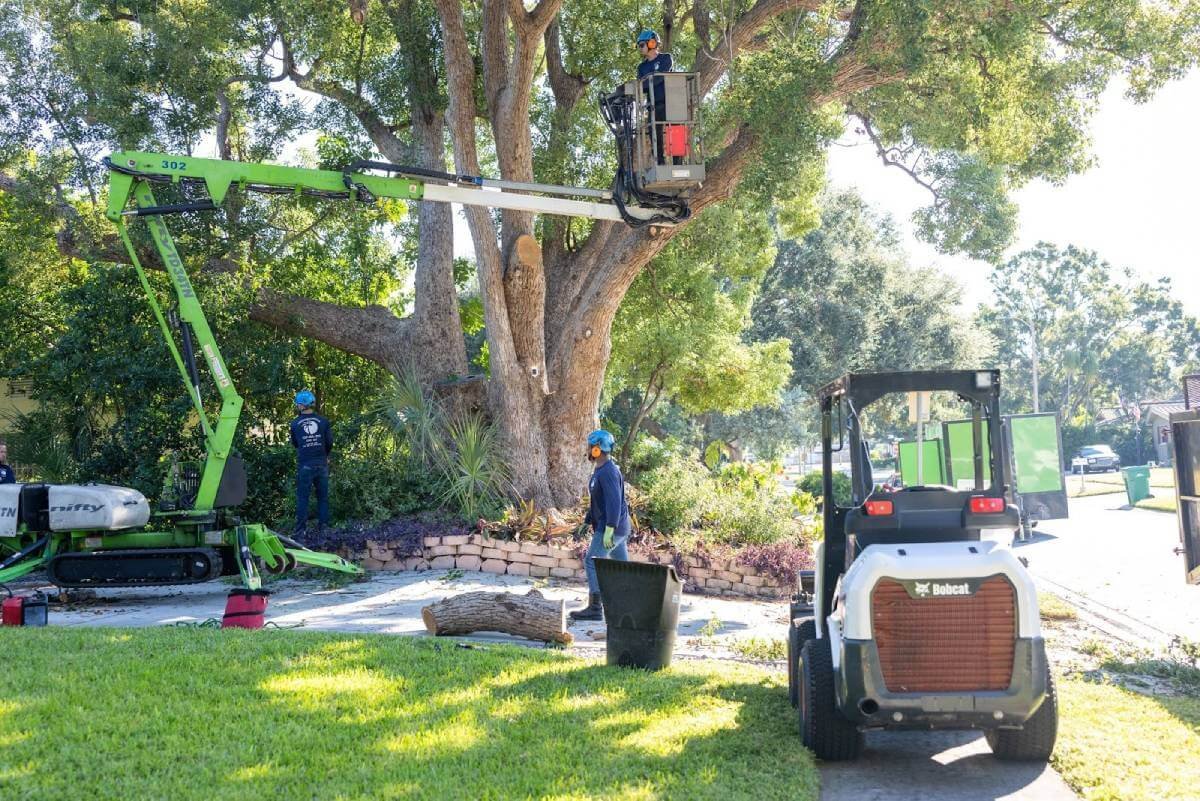
Florida’s heat, humidity, and mild winters mean insects and diseases can run almost year-round on palms and oaks—the backbone of most yards. The goal is not to memorize every Latin name. It is to spot early warning signs, reduce stress on the tree, and know when DIY stops and a pro starts.
This guide covers the most common Florida palm pests and oak problems homeowners hear about, what they look like, and how to think about management without turning your yard into a chemistry experiment.
Why Do Palms and Oaks Get Hit So Hard in Florida?
Palms and live oaks are everywhere for a reason: they handle sun and storms better than a lot of alternatives. They also attract specialists—bugs and fungi that know exactly where to feed.
Humidity helps fungi. Pruning wounds, mower nicks, lightning, and hurricane damage give pests entry points. Stressed trees (too much water, too little, root compaction, or recent construction) send signals that weak targets are open for business.
That is why a quick canopy scan after hurricane season matters: the same events that damage roofs also stress root plates and bark. Pair pest clues with structural red flags from 10 signs a tree needs attention—insects often show up on already-stressed trees.
Common Palm Pests and Problems in Florida
Palmetto weevil
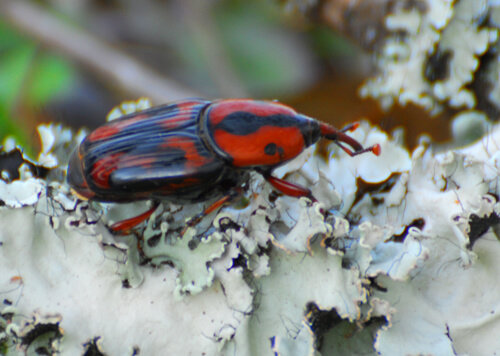
The palmetto weevil (Rhynchophorus cruentatus) is famous for attacking stressed or injured palms, especially Canary Island date palms. The larvae bore into the crown or upper trunk.
Signs to watch for: sudden wilting or tipping of the crown, holes or mushy tissue near the base, odd odors, or the crown collapsing over a few weeks to a couple of months.
Why it matters: advanced infestations are often fatal. Prevention starts with avoiding trunk wounds, not over-pruning “hurricane cuts,” and removing dying palms that can attract beetles to the neighborhood.
Treatment reality: soil drenches or trunk applications are sometimes used only where legal and labeled, and often by licensed applicators. This is not a great first DIY project—mis-timed or wrong product choice wastes money and can violate Florida rules, especially near water.
Red palm mite
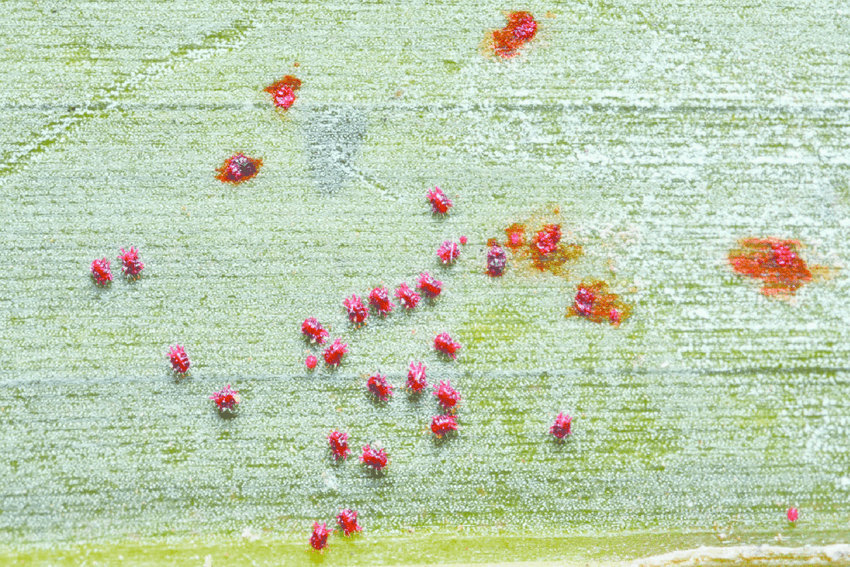
Red palm mite (Raoiella indica) shows up as bronze, rusty, or speckled fronds, often with distortion on new growth. Coastal counties saw serious spread in past years; it can flare when conditions are right.
What to do: confirm the problem (mites vs. nutrition vs. disease), then follow an integrated plan—sometimes horticultural oil or other options per label, sometimes biological control or simply washing down fronds where appropriate. Your UF/IFAS Extension county page is a good fact-check before you spray everything in the shed.
Palm leaf skeletonizers
Palm leaf skeletonizers (for example Homaledra species) are caterpillars that chew between leaf veins and leave lacy, skeletonized fronds, sometimes with silk or frass.
Impact: heavy feeding weakens the palm and can open the door to secondary issues.
Management: remove and bag heavily infested fronds if your local guidance allows; avoid spreading material across the yard. For repeat outbreaks, a pro can map timing and products to the pest’s life cycle.
| Problem | Typical first clue |
|---|---|
| Palmetto weevil | Sudden crown wilt, base damage, fast decline |
| Red palm mite | Bronze speckling, tight curl on new fronds |
| Skeletonizer caterpillars | Lacy fronds, silk, chewing damage |
Common Oak Problems in Florida (Insects and One Look-Alike)
Wood-boring beetles on oaks
Several wood-boring beetles attack stressed live oaks and other hardwoods. Larvae tunnel under bark; you may see fine sawdust, small round or D-shaped exit holes, and branch dieback starting at the tips—often after drought, root injury, or storm stress.
Why it matters: localized damage can be pruned out; widespread tunneling plus decay can mean the tree is no longer safe. If the canopy is crashing and the trunk sounds hollow, read dead oak risks and get a structural assessment before the next wind event.
Twig girdler
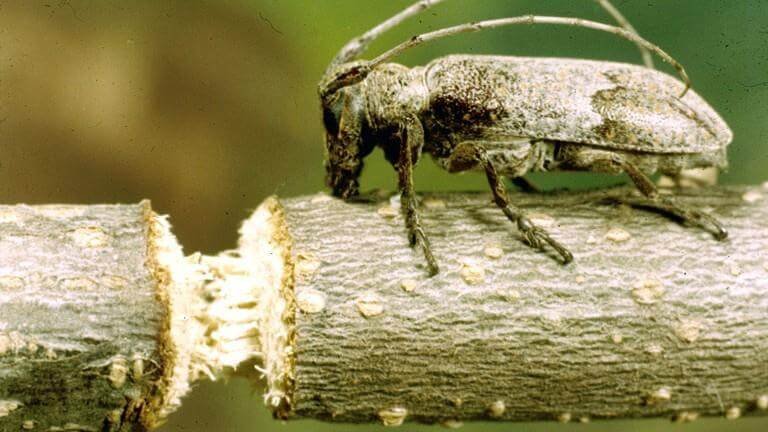
Twig girdlers (Oncideres cingulata) are longhorn beetles that chew a ring around small twigs so the tips break off. You find clean-cut twigs under live oaks in fall—more annoying than deadly.
Management: rake and discard fallen twigs to break the life cycle; keep the tree otherwise healthy.
Oak leaf blister (fungus—not a bug)
Oak leaf blister (Taphrina caerulescens) causes puckered, pale blisters on young leaves in spring. It is fungal, not insect damage.
Impact: on a vigorous oak it is often cosmetic for the year; repeated issues plus poor spacing or constant leaf wetness can add stress.
Caterpillar outbreaks
Periodic caterpillar defoliations hit oak clusters—sometimes after storms or mild winters. You may see chewed leaves, silk, or hair-covered larvae.
Impact: healthy oaks usually push new leaves, but repeat defoliations drain energy. Large outbreaks are worth a coordinated plan with a pro rather than random spraying.
| Problem | Typical first clue |
|---|---|
| Wood-boring beetles | Frass, exit holes, tip dieback on stressed trees |
| Twig girdler | Pencil-sized twigs on the ground; clean cuts |
| Oak leaf blister | Spring leaves look blistered or cupped |
| Caterpillar outbreaks | Chewed canopy, silk, visible larvae |
Prevention: Cultural Care Before Chemicals
Most long-term wins come from cultural IPM—integrated pest management—before bottles:
- Water deeply and less often once established; avoid constant shallow wetting that stresses roots and fuels fungi.
- Mulch in a 2–3 inch ring, not against the trunk flare.
- Prune in dry weather when possible, with clean tools; avoid lion-tailing oaks or over-stripping palms.
- Fix drainage and keep heavy equipment off the root zone—compaction invites decline, and decline invites borers.
- Do not over-fertilize: excess nitrogen can favor some pests; palms often need a soil test–driven program (your Extension office can point you to labs).
Scan canopies every couple of weeks in the rainy season: new discoloration, holes, sawdust, or ant highways on the trunk are worth a closer look.
When Should You Call a Professional?
Bring in an ISA-certified arborist or a licensed pest-control operator when:
- The crown is collapsing or more than roughly a third of the canopy fails quickly
- You see trunk ooze, large dead patches, or multiple trees on the block declining the same way
- You need trunk injection, soil treatment, or sprays that require Florida licensure or have water-body setbacks
- You are unsure whether the issue is insect, disease, or environment—treating the wrong thing does not help the tree
If the tree is past saving, tree removal cost in Florida and how to compare fair quotes will help you evaluate estimates. For risky drops near the house, cheap vs professional removal is worth five minutes before you hire. After the tree is gone, stump grinding is how most homeowners clear the footprint for grass or new plants.
Bottom line
Florida palm and oak pests are manageable when you catch them early, keep trees unstressed, and use science-backed ID (IFAS, a qualified arborist) before you treat. Save aggressive chemistry for labeled, legal applications—usually with a pro—and prioritize tree structure and safety when decline has gone too far.
If you are not sure what you are looking at, take clear photos of leaves, fronds, trunk base, and any holes or sawdust, then ask for an on-site evaluation. The right diagnosis is cheaper than the wrong treatment.
Frequently asked questions
Quick answers about this topic. See the article above for full context.
The palmetto weevil often tops the list for Canary Island date palms and some other species: it attacks stressed or wounded palms at the crown and can kill a tree in weeks to a few months. Early crown wilt, holes or ooze near the base, and sudden crown collapse are red flags—get a professional assessment quickly.
Related Articles
Continue reading with these related posts

Dead Oak Trees in Florida: A Hidden Risk
Dead live oaks in Florida: warning signs, storm risk, removal difficulty, insurance limits, and when to act before an emergency.
Stump Grinding in Florida: What Homeowners Should Know
Practical stump grinding guide for Florida: why grind, how it works, local soil and weather quirks, pricing ballparks, safety, and when to hire a pro.

Cheap vs Professional Tree Removal in Florida: What’s the Real Cost?
Why tree removal quotes in Florida vary widely: what cheap work skips, what pros include, and when a low price stops being a deal.